

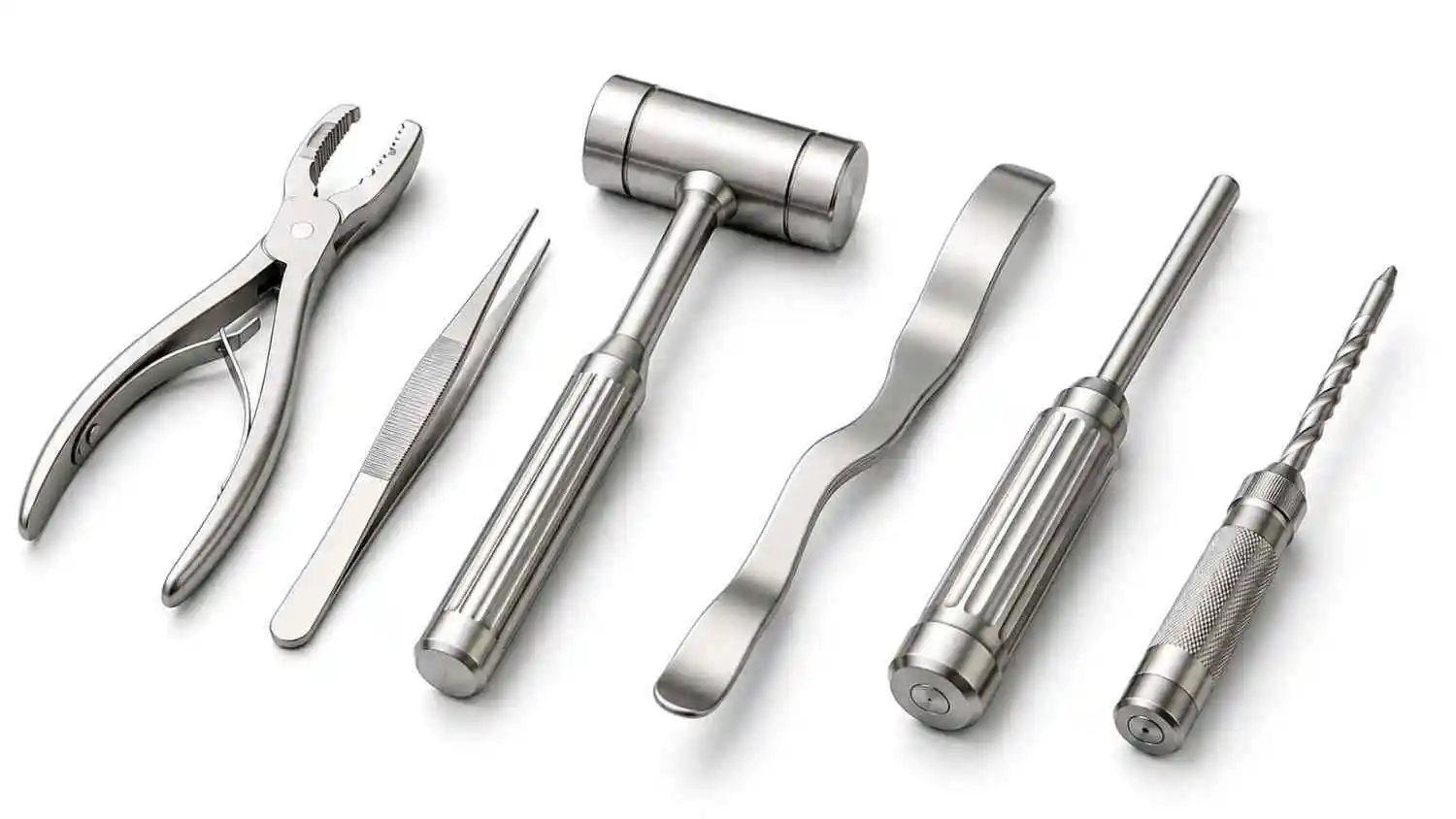
- Understanding Orthopedic Instruments and Their Role in Modern Healthcare
- Different Types of Orthopedic Instruments Used in Hospitals
- Key Features of High-Quality Orthopedic Instruments
- Benefits of Using High-Quality Orthopedic Instruments in Hospitals
- How to Choose the Right Orthopedic Instruments for Hospitals
- Applications of Orthopedic Instruments in Medical Procedures
- Why Choose a Reliable Orthopedic Instruments Manufacturer in India
- Investing in Quality Orthopedic Instruments for Better Surgical Results
High-accuracy, reliable and robust, orthopedic instruments are a crucial requirement in today's operating theatres. In surgical interventions on muscles, joints, bones or other tissues, high-precision orthopedic instruments used for surgery can have a direct impact on the success of the procedure. High-quality instruments are characterized by excellent performance, precise movements, reliable handling and durability for intensive surgical applications.
Orthopedic surgical instruments enable doctors to achieve accurate interventions in the phases of investigation, preparation, fixation and reconstruction. Thanks to the use of solid materials and the application of ergonomics principles, the highest standards are ensured during preparation, performance and patient care.
Understanding Orthopedic Instruments and Their Role in Modern Healthcare
Orthopedic instruments are instruments utilized by the orthopedic surgeon to properly diagnose, treatment, and manage bone, joints, muscles, or any musculoskeletal part of the body. They are used to stabilize fracture, joint repairing, re-construction, or trauma surgery. Various instruments for orthopedic surgery are utilized for handling, cutting, drilling, fixing, and placement of the parts that are manipulated by the surgeons to complete any procedure.
Secure orthopedic surgery tools assist orthopedic surgeons for accurate operations in delicate parts of anatomy.
In aggressive situations, orthopedic instruments should be durable, well-balanced, corrosion resistant as well as stable in all conditions. Surgical instruments manufactured well, would further allow smooth performing procedure, efficiency of the operating room, patient comfort and meet the needs of present orthopedic surgery.
Different Types of Orthopedic Instruments Used in Hospitals
In the hospital/surgical centers, the main types of orthopedic instruments are:
- Cutting instruments - These instruments are necessary for removing, sawing or cutting bone and tissues during surgery.
- Bone-holding instruments: Enable and enhance secure positioning of bone during treatment.
- Retractors: Used to retract soft tissues clearly away from the surgical site.
- Grasping instruments: Assist the surgeon in firmly and precisely controlling handling of bone or tissues or instruments.
- Drilling and reaming tools: Facilitate the manipulation of the bone prior to fixation procedures, implantology and reconstructions.
- Fixation instruments: Guide the placement and fixation of screws, plates, wires, K-wires, and similar items.
- Orthopedic instrument trays or packs: Bone cutting instruments bundles specific instruments required for particular procedures-an effective means of organization for operative workflow.
The choice of which orthopedic instrument sets, procedures or combination of those to use are based on the individual operation, operation techniques, anatomical situation, and the clinical environments.
Bone Cutting and Shaping Instruments
Bone cutting instruments is a group of surgical tools for orthopedics which include bone saws, chisels and osteotomes and enable accurate cutting and remodeling of bones during surgeries. The tools ensure appropriate shaping and removal of bone tissue and promote the successful surgical treatment of fractures, joint diseases, deformities and reconstructions. When creating bone surgery instruments it is important that they are strong and sharp, comfortably to handle (ergonomically) and deliver dependable results under surgical conditions.
Bone Holding and Fixation Instruments
Bone holding instruments secure bones in position to be able to achieve proper alignment. Surgifact offers a variety of surgical tools such as bone holding forceps and clamps. In orthopedic surgical tools, it is essential that the surgeon has full control over the bones they are attempting to position, set, or otherwise manipulate for procedures like fractures or reconstructions. For secure, solid holding, choose from this collection of durable bone holding tools.
Retractors and Surgical Exposure Instruments
Designed to keep muscles and tissues gently retracted from the area of surgery, orthopedic retractors provide surgeons with clear access to the treatment area for better exposure and precision. They facilitate clear visualization required during operations on various parts of the body. Available in various designs appropriate for different anatomical sites and operational approaches, these surgical instruments with robust manufacturing and ease of grip are indispensable in the or for sustained, controlled access in orthopaedic surgical procedures.
Drilling, Measuring and Implantation Instruments
Creating specific holes and measuring bone surfaces in surgical interventions requiring implant, fixation device and reconstruction, Surgical depth gauges provide the surgeons with information about appropriate depths, with precision. Surgical measuring instruments assist in gaining an accurate assessment of the bone measures, as well as fitting of implants. High quality measuring instruments should yield to sharp and defined measurements, stable use and reliable quality. Orthopedic drill instruments together with measuring devices help teams obtain a higher quality outcome in surgeries that include fixation implants.
Key Features of High-Quality Orthopedic Instruments
High-quality orthopedic instruments facilitate precision and effectiveness as well as safety in the operating room. The following are some qualities for your consideration:
- Corrosion Resistance- The ability for the medical tools to tolerate repeated encounters with water and cleaning solutions.
- Precision Manufacturing- The accurate measuring ensures a smooth process with no variation.
- Ease Ergonomic Design- The ability for the handle to fit well with the user’s hand.
- Sterilization Compatibility- The ability for the devices to be easily cleaned.
- Durable- The materials of good resistance for repeated surgical applications.
- Consistent Quality: The high quality of manufactured orthopedic instruments.
The best orthopedic instruments manufacturer like Surgifact uses these criteria for production, so their tools can offer great results.
Premium Material and Manufacturing Standards
Surgical grade stainless steel is used by the surgical world because it is strong enough, corrosion resistant and resistant to repeated washing/sterilizations. Stainless steel surgical instruments need to be polished; this gives good workability, improved tool cleanliness and a secure hand grip. In an effort to control the outcome of every surgical tool, quality manufacturing steps have been applied to the machining process and fine finishing. Quality surgical tools sourced from within controlled production environments can be relied upon.
Precision Design and Surgeon-Friendly Handling
Weight balance, design of a handle, and precise fabrication can contribute to better control of surgical instrument handling. A precision orthopedic instruments will offer better handling control without inducing fatigue on the surgeon’s hands. They help secure in grip with well designed handles while well balanced structure can offer greater ease and smoothness of movement. Correct proportions and assembly of surgical instrument’s parts could provide surgeons to complete procedures for the finest work.
|
Here is another blog you might be interested in. How Orthopaedic Instrument Sets Are Beneficial for Bone and Joint Care |
Benefits of Using High-Quality Orthopedic Instruments in Hospitals
Employing dependable orthopedic instruments for hospitals can contribute to facilitating simpler procedure processes and effectively performing surgical procedures. Properly engineered instruments facilitate handling of the surgical instrument in a controlled manner for performing surgical procedure skillfully.
- Increased surgical efficiency- Properly engineered instruments enable handling of the surgical instrument and procedures at the surgical site.
- Reduced procedural risks- Accurate and reliable instruments facilitate regulated movement and skillful surgical approach.
- Longer instrument life- Durable instruments and quality manufacturing process allow use and re-use of surgical instruments at repeated levels.
- Enhancement in patient care- Effective performance contributes to constant proceeding and precise conclusion.
- Effective workflow- Organized instruments and their sets assist the surgical team to perform preparation with agility and dexterity.
These surgical tools benefits are worthwhile to acquire.
How to Choose the Right Orthopedic Instruments for Hospitals
As for quality, usability, as well as trustworthiness of the seller the following should be analyzed. Choosing orthopedic instruments on the basis:
- Quality of material – Medical grade, long-lasting materials and with resistance against oxidation.
- Accuracy- Check alignment, manufacturing precision, surface treatment.
- Orthopedic Surgery’s requirements- Select instruments adequate for the procedure, surgery, or for clinical use.
- Sterilizability- Whether you have good ability to sterilize.
- Proof of Quality- Check inspection, manufacture quality standards.
- Reliable Orthopedic Instruments Supplier- Consistency of product, customizability of products, fast delivery and also after-sale service.
- Maintainability and service- Does this provider offer good assistance for the care, cleaning, handling, storage, and upkeeping.
Hospitals need to have long-lasting devices to provide a great workflow of surgical operation and for proper patient care and therapy.
Check Manufacturer Experience and Product Quality
Hospitals should collaborate with experienced manufacturers having clearly stipulated quality control processes at every stage of production. A dependable orthopedic instruments manufacturer in India like Surgifact should have consistent choices in terms of raw materials, manufacturing tolerances, finishing and surface properties, dimensional and appearance controls, and performance testing.
Experienced manufacturers would be more conversant with specific clinical needs and have products adapted for varied orthopaedic procedures. Quality management would ensure product reliability, strength and compatibility with sterilisation.
Evaluate Product Range and Customization Options
When looking for an orthopedic instrument supplier you will want to look for one who provides a wide variety of instruments for surgical needs. Being able to locate from holding, cutting, measuring, retracting, drilling, and fixation helps facilities procure appropriate instruments from one place.
The ability for custom surgical instruments is important for unique surgical applications when conventional designs are not efficient for surgery. These can be built to client’s dimensions, configuration, manipulation technique, and specific clinical application.
Consider Sterilization and Maintenance Requirements
For reliability and repeat clinical use, it’s important to maintain instruments via regular, thorough cleaning, sterilization and care. Surgical instruments for hospitals require smooth, functional, accessible design and compatible material for accepted techniques of sterilization.
The instruments should be cleaned, checked and maintained, as per manufactures guidelines, following use. This allows effective corrosion, degradation, maintenance and performance levels to be maintained for continued useful service and effective infection control.
Applications of Orthopedic Instruments in Medical Procedures
The orthopedic surgical instruments can be utilized for various applications related to bone, joints and other musculoskeletal components. The choices of instruments vary based on the nature of surgery, anatomical region being operated and the procedure required.
- Fractures: Aligning bone, preparing, reducing and fixing fracture.
- Arthroplasty (Joint Replacement): Preparation, seating implant and dealing with soft tissues.
- Trauma: Fixation of bone and soft tissues following extensive traumatic bone and soft tissue injuries.
- Spine surgery: Bone preparation, alignment, stabilization.
- Reconstructive surgeries: Shaping and repairing of damaged or abnormally formed body structures.
In each orthopedic surgical instruments applications allow for control and manipulation during surgery.
Why Choose a Reliable Orthopedic Instruments Manufacturer in India
A quality orthopedic instruments manufacturer in India will offer consistent quality levels at material, manufacturing, finishing, inspection and packaging stages. Sound quality-control systems are necessary to produce quality instruments for demanding clinical requirements. Bulk supply capability is also desirable for healthcare organizations that have frequent procurement needs or require larger instrument sets.
Surgifact, being a well-established orthopedic instruments supplier in India, would also provide wide product access, but will enable on-time order delivery at consistent specifications. The right Indian manufacturers can help healthcare organizations to build reliable surgical inventories and achieve their global and internal procurement goals.
Investing in Quality Orthopedic Instruments for Better Surgical Results
Reliable, accurate and durable orthopedic instruments for patients and hospitals guarantee consistent surgical results. Efficient surgery and long lasting function are only possible with quality materials, precise production, comfortable ergonomics and correct sterilization compatibility. Before you decide to buy orthopedic instruments, make sure to evaluate the quality, intended use and personalization needs and the dependability of the supplier.
Join hands with an experienced orthopedic instruments supplier, Surgifact for reliable products and quick services.
Consider precision, durability, material quality, ergonomics, and sterilization compatibility.
Yes, customized instruments can be developed for specific surgical requirements.
Trauma hospitals use bone holders, retractors, drills, saws, and fixation instruments.
Choose a supplier with consistent quality, product variety, and dependable service.
Yes, Surgifact offers orthopedic instruments for various surgical applications.