

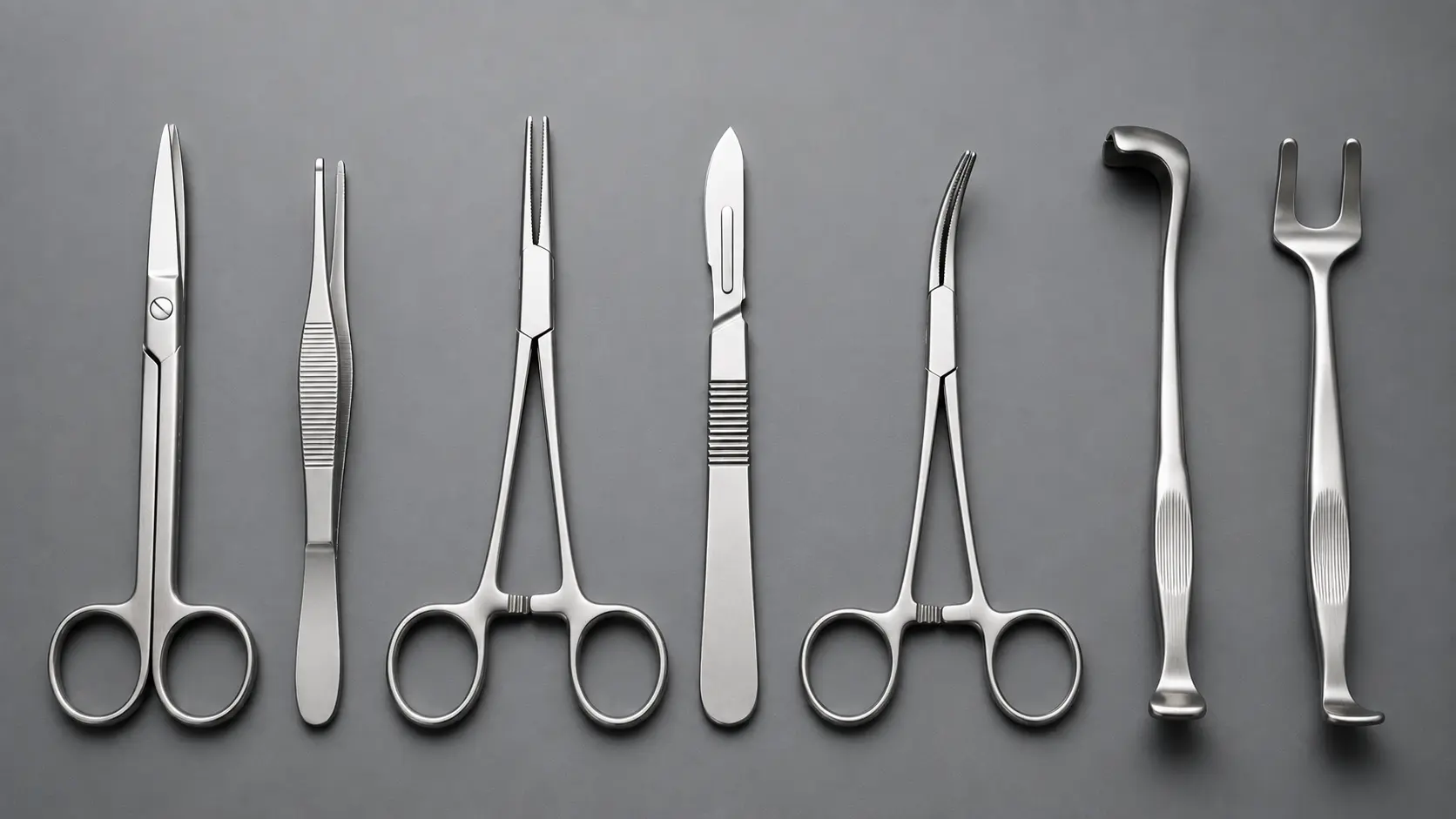
- Surface Finish and Instrument Performance
- What Makes Surgical Instruments Precise?
- About Surgifact
- Uses of Surgical Instruments
- Technical Specification
- How Usability Supports Surgical Instruments Performance
- Different Instruments Perform to Differing Levels of Precision
- Why Choose Surgifact for Surgical Instruments?
- Conclusion
There is more than the surgeon involved when working in surgery; the quality, design, balance, and usability of a tool can dramatically affect how effectively and accurately a surgeon's task can be performed. Whether it's holding, cutting, sewing, dilating, dissecting, retracting, or handling delicate tissues, surgical instruments are made for a purpose.
Well-designed surgical instruments will ensure a balance between the accuracy, ergonomics, adequate materials, instrument control, and performance of the instrument. These features can help the operating theatre staff control proceedings more effectively as well as a smoother more efficient surgical process workflow.
Therefore when looking to purchase surgical instruments for your hospital or clinic facility you should consider aspects beyond appearance and surgical instruments price such as intended use, build quality, comfortable handling characteristics and ability to tolerate sterilization and maintenance procedures.
Surface Finish and Instrument Performance
A factor in the performance of any instrument that is occasionally overlooked is the surface finish. A well-finished instrument surface will ease cleaning and will assist in maintaining instrument presentation and useful condition.
Smooth, well finished surfaces can also offer less areas for residue and biological matter to lodge in although not substituting the need for cleaning, inspection, sterilization and adequate storage.
Always choose reliable surgical instruments manufacturers in India who know about medical instruments and market insights.
Fun Fact: “Many surgical instruments have specialized designs that may look simple but contain carefully engineered joints, tips, locking systems, and handles to perform highly specific surgical tasks.”
What Makes Surgical Instruments Precise?
The precision of any surgical instrument can be found in a complex interplay between different factors regarding design and construction.
Precise Manufacturing
Errors in dimensions, alignments or joint construction will translate into less efficient functioning. Precision manufacturing will ensure that the parts of an instrument that are crucial – including both jaws/tips, handles, hinges, and ratchets - perform accordingly.
Controlled Movement
Instruments such as forceps, scissors, needle-holders and clamps benefit from smooth predictable performance; well-constructed joints will aid the open, closed or gripping motion to achieve a controlled cutting/gripping force.
Fine Working Tips
Fine tips are more sensitive to minute differences in shaping and this enables them to make delicate contact, and so, hold delicate tissues in position or accurately manipulate sutures.
Balanced Construction
Instruments that exhibit good balance offer control, better presentation and also lend a comfortable feel when handled with repetitive actions.
Surgifact is the leading surgical instruments suppliers in India with years of experience.
About Surgifact
Surgifact / Vaishnav Surgical Co., is a world-renowned manufacturer and exporter of finely engineered surgical instruments. Founded by Mr. Sumeer Thukral in 1967, the company has carved a niche for itself by providing accurate, reliable and clinical medical instruments for close to 59 years. Operating from Jalandhar, Punjab, Surgifact serves a wide array of specialities within the medical sector-cardiology, orthopaedics, neurology, ENT, dental instrument, etc. All instruments are produced from high-quality raw materials and fabricated to meet ISO, GMP and CE standards so that each instrument stands for a higher quality and performance. Today, institutions worldwide and distributors rely on the company's trusted and effective surgical solutions.
Uses of Surgical Instruments
Surgical instruments are often used for both precise and controlled working actions but also for a very broad range of surgical procedures:
Orthopaedic Surgery
Bone handling, tissue handling, joint implantation etc.
Plastic Surgery
Precise cutting to form new structures and tissue repair.
Dental Surgery
Extraction of teeth/gums, tissue manipulation/cutting and sutures.
E.N.T.
Dealing specifically with the structures in the ear, nose and throat.
Ophthalmic Surgery
Delicate instruments used inside the body with minute structures.
General Surgery
Cutting, grasping, manipulating, retracting, dissecting and suturing.
Gynaecological
Manipulation of reproductive tissues/structures, examination and surgery.
Laparoscopy
Minimally invasive working with very fine instruments used inside the body cavity.
Such applications mean there are a number of various locations that use this equipment regularly, such as in hospitals and in clinics, within the operating theatre or a specialized center working solely in that area of surgery.
The right decision takes you to trustworthy surgical instruments exporters in India who are the best in the market like Surgifact.
|
Here is another blog you might be interested in. |
Technical Specification
The following table talks about the technical specification of surgical instruments.
| Parameter | Specification |
|---|---|
| Material Grade | Medical-grade Stainless Steel |
| Surface Finish | Smooth / Satin / Polished finish |
| Corrosion Resistance | High corrosion resistance for clinical environments |
| Sterilization Compatibility | Autoclave compatible |
| Reusability | Reusable after proper sterilization |
| Manufacturing Standard | Hospital & clinical use compliant |
| Durability | Designed for long service life |
| Application | General surgical and clinical procedures |
How Usability Supports Surgical Instruments Performance
Precision on its own will simply never be as sufficient as when the instrument is easily used to the doctor's control and command.
Ergonomic Handles
Handed instruments with adequately designed handles will make for much greater control of finger as well as hand gestures with appropriate dexterity.
Appropriate Weight
An instrument is expected to handle itself well, offering sufficient mass to keep the instrument steady whilst also ensuring that it is not so heavy, as to cause overbalance in terms of difficulty.
Easy Operation
Mechanisms need to operate, where appropriate, smoothly to allow the user to retain focus upon the procedure itself and also to avoid potential discomfort due to awkward operation when using either ratchets, hinges, handles and locking systems.
Procedure-Specific Design
Instruments come in variety of shapes and sizes which are dictated by the nature of the task involved; therefore working tip shapes and sizes, instrument tip styles, working lengths and jaw designs vary immensely according to procedural demands placed upon an instrument and in doing so contribute significantly towards its usability and a positive user experience.
Surgifact is one of the best surgical instruments provided to hospitals, medical centres, etc.
Case Study
At the local multi-specialty hospital, a switch to re-designed surgical instruments meant greater ease of use. This was within only one year seen to enhance procedural flow, and minimise time-interruptions.
Different Instruments Perform to Differing Levels of Precision
Each surgical instrument was developed against a planned functionality.
| Instrument Category | Primary Function | Usability Consideration |
|---|---|---|
| Scissors | Cutting and dissecting | Smooth opening and controlled cutting |
| Forceps | Holding and manipulating | Secure grip and precise tips |
| Retractors | Holding tissues aside | Stable positioning and appropriate shape |
| Needle Holders | Holding needles during suturing | Controlled grip and locking action |
| Clamps | Occluding or holding structures | Reliable closure and controlled pressure |
| Speculums | Providing access and visibility | Smooth adjustment and comfortable handling |
| Surgical Knives | Incision and tissue cutting | Sharp, controlled cutting edge |
Before you make a decision to buy surgical instruments you must know the instrument category and their functions.
Why Choose Surgifact for Surgical Instruments?
Here are some of the reasons:
- They support efficient hospital inventory management.
- They comply with national and international standards.
- They have export-ready sets for global hospital requirements.
- They provide reliable documentation for procurement and audit.
Take a pause and visit Surgifact for having quality surgical instruments for hospital and ensure precise and accurate movement.
Conclusion
Every surgical instrument contains precision and usability. When designing and manufacturing instruments, many considerations need to be made such as accuracy, materials used, building structure, comfort for use, mechanism operation and finally the proper method of sterilisation or storage for that type of instrument.
| Searching for surgical instruments near me then go and contact Surgifact now. |
Medical-grade stainless steel is widely used for many reusable surgical instruments because of its strength, corrosion resistance, and suitability for appropriate sterilization processes.
Hospitals should evaluate the intended application, material, design, precision, handling, sterilization compatibility, maintenance requirements, supplier reliability, and overall value.
Not necessarily. surgical instruments price should be considered alongside construction quality, materials, functionality, durability, usability, and supplier reliability.
A hospital should avoid selecting instruments solely because they have a lower purchase cost. A more useful evaluation considers quality, application, handling, maintenance, durability, and long-term usability together.
Hospitals can find quality surgical instruments from Surgifact as they ensure use of high-quality materials while maintaining durability and safety.