

- What Is a Tubular Retractor and How Does It Work?
- Types of Tubular Retractor Systems
- Key Features to Look for in a Tubular Retractor
- Essential Tubular Retractor Set Items
- Uses of the Tubular Retractors in Surgery
- Benefits and Limitations of Tubular Retractors
- How to Select the Appropriate Tubular Retractor System
- Selecting Tubular Retractor Manufacturer and Suppliers in India
- Conclusion
A tubular retractor is a device designed to form a tunnel of minimal width to the target location in certain minimally invasive procedures. In such cases, a tubular retractor is used to provide access to more distant tissue through a restricted surgical opening. The primary indication for use of the tubular retractor systems is minimally invasive spine surgery, although it could also be used for certain neurosurgical procedures.
Features, specifications, sizes and compatibility of the tubular surgical retractor will give hospitals and distributors of surgical instruments a lot of guidance when purchasing tube surgical retractors. The material of the tube, the quality of the material, the specification and the accompanying tube surgical retractor system document should also be taken into account.
What Is a Tubular Retractor and How Does It Work?
A tubular retractor is an open-ended tube used to access the surgical site. The retractor maintains a pathway for accessing the surgical site by holding back tissues and allowing the surgeon a visual pathway for looking into the surgical site.
After sequential dilation to separate the tissues and establish the access corridor, a spinal tubular retractor can be inserted. The retractor is in situ or advanced and can be held or fixated with the aid of a hold/fixation instrument if necessary The size and shape of the retractor influences the working space and the angle of view of the working instruments; based on approach, patient anatomy and manufacturer one of the following systems is selected.
Types of Tubular Retractor Systems
Tubular retractor systems come in different variations to serve particular access needs. The two most common options are fixed and expandable systems. The primary distinctions between them have to do with the tube size and which part of the system is adjustable, as well as how the working channel is created.
Fixed Tubular Retractors
Fixed tubular fixed diameter tubing retractor, offering a predetermined working corridor. Fixed tubular retractors could be used for procedures where the access diameter needs to stay constant. Users should always determine the internal diameter of the tube, working length and instrument compatibility to be able to decide if a fixed tubular retractor system is right for them.
Expandable Tubular Retractors
Expandable tubular retractors have an adjustable system that can expand the working space according to the purpose of use of the system. Expansion will provide extra access or visibility depending on the model. Prior to buying, simply review the adjustment mechanism, expansion range and the fixation requirements to see if the minimally invasive tubular retractor is suitable for the application.
Key Features to Look for in a Tubular Retractor
Some of the things to look for in a tubular retractor include size, construction, material, finish and texture and whether it is compatible with your other equipment. Other potentially important characteristics for you and the application could be width, diameter, length, ergonomic design, lumen size, comfort, ease of use, etc.
Tube Diameter and Working Length
Tube diameter correlates to the approximate working corridor width and working length to the depth of reach of an instrument. Dimensions can be chosen to allow appropriate access with minimal instrument restriction. Match tubular retractor system to target anatomy, the corridor and compatible instruments.
Construction Material, Finish & Stability
Material and surface finish should also be considered when dealing with, reprocessing and in use. It is the responsibility of the purchaser to review material and manufacturing data, in accordance with reprocessing protocols, cleaning, disinfection and sterilisation. Stability can be equally critical as unwanted mobility could be difficult to access. Compatibility of fixation mechanism with operating set-up and planned use is vital.
Essential Tubular Retractor Set Items
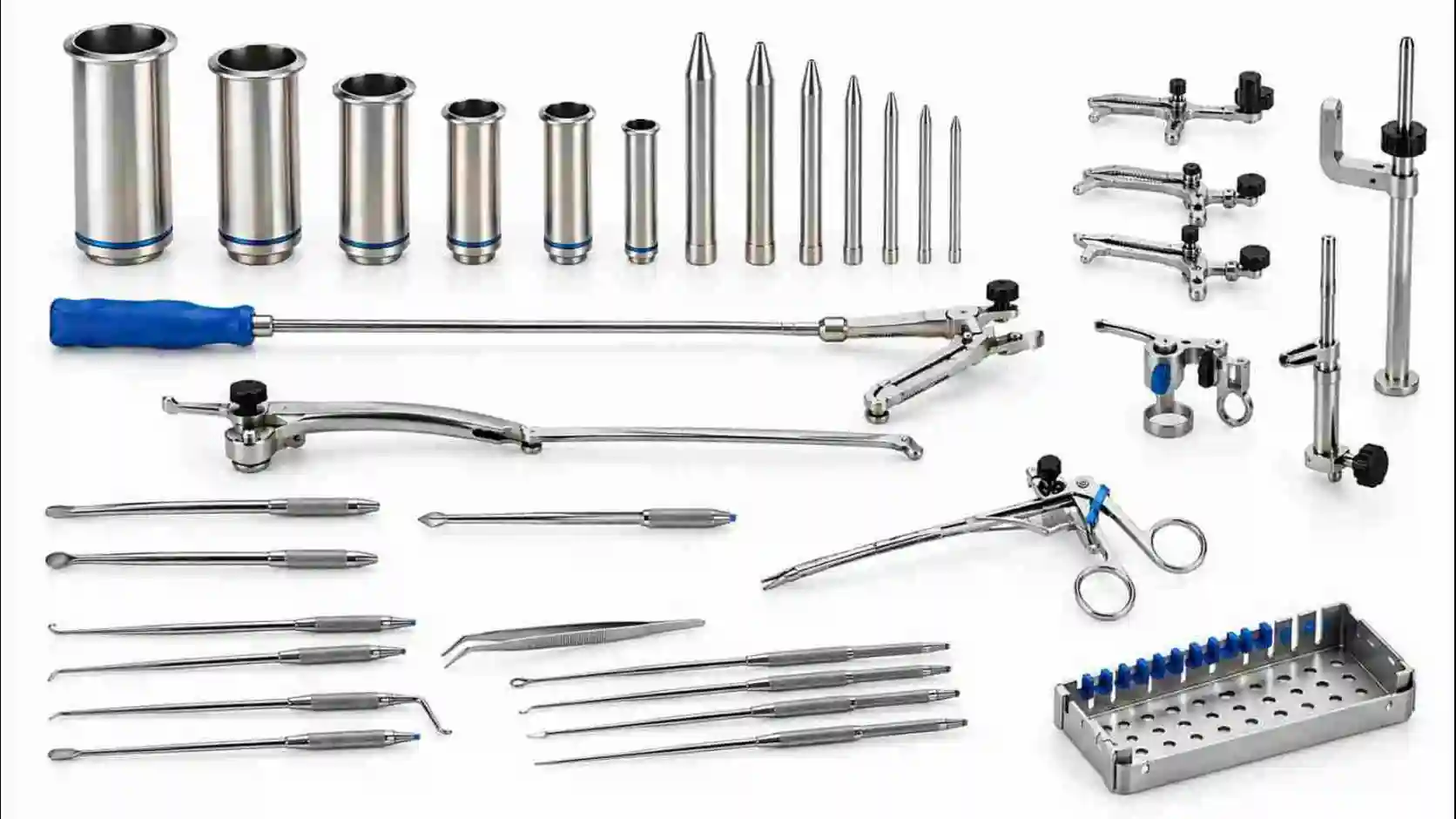
An example of a tubular retractor set would be these components that can be used on their own, as a pair or together depending on the manufacturer, application and surgical method.
- Working tubes: Create and maintain access corridors to the operation site.
- Sequential dilators: Create space between tissues before you work.
- Holders and support arms: Assist in holding the retractor in place while the operation is being carried out.
- Fixing devices: Fix the structure at places of fixing.
- Accessories that are compatible: Corner support and instrument working.
During the purchase of a set of a tubular retractor, it is important to check the components included in the package. Some accessories may be sold separately and some instruments are compatible with the specific tubular retractor system.
Uses of the Tubular Retractors in Surgery
Tubular retractors allow the execution of specific surgical procedures in a targeted manner. The choice of procedures is determined by the size, shape and application of a particular system. They are mainly used in minimally invasive tubular retractor for spine surgery and some types of tubular retractor for neurosurgery.
Tubular Retractors in Spine Surgery
This example of a tubular retractor for spine surgery offers a working corridor for some techniques, such as disc and spinal decompression procedures. If the working path has been prepared, the tube supporting the target exposure is now entered and usable surgical instruments are brought in to work through the corridor. This may require less tissue exposure than some other approach, but this will be somewhat surgery, patient and surgeon technique dependent. The size of the tube, working length and fixation configuration are all to be decided upon by the surgeon.
Neurosurgical Tubular Retractors
A tubular retractor for neurosurgery (eg, for greater access to deeper-seated intracranial structures via a limited surgical pathway) may be used in a subset of cases where access is needed. The system needs to be specifically designed for the procedure to be performed. The general intended uses, contraindications, patient positioning and interaction with other surgical products and instrumentation may also differ from other surgical procedures such as spine retractor systems, and in all cases should be considered on a case-by-case basis.
Benefits and Limitations of Tubular Retractors
A minimally invasive tubular retractor approach allows access to the target area while preserving the working channel, and provides the possibility of working smaller instrument ports. Access provided by this type of approach may be more limited, relative to a more expansive approach, depending on the procedure.
But the small working channel can limit instrument maneuverability and visibility. Improper sizing or placement may also impact access. Not all procedures can be performed via a spinal tubular retractor approach. Following the procedure, the surgeon will assess the patient's anatomy, procedure and device compatibility to make the system decision.
How to Select the Appropriate Tubular Retractor System
Choices in tubular retractor system selection should be based on clinical and product specifications. Buyers must take these into account:
- Application: Ensure the system is applicable for the approved spinal or neurosurgical operation.
- Dimensions: Verify tube diameter, working length and configurations.
- System requirements: Ensure that you are compatible with these dilators, holders, fixation items and any other instrumentation.
- Material and reprocessing: Review the material notes and manufacturer instructions related to cleaning and sterilisation.
- Product documentation: Examine quality documentation, applicable traceability information, and intended use documentation.
- For ordering needs: Confirm parts in stock, order quantity, delivery time and aftermarket support.
When analyzing these factors, hospitals, distributors, and medical equipment purchasing teams are able to come up with the right system for them.
Selecting Tubular Retractor Manufacturer and Suppliers in India
Details on the manufacturer of the tubular retractor are normally found on the tubular retractor specification sheets. Buy tubular retractor from leading tubular retractor manufacturers in India like Surgifact that can give you details on the various product specifications. Tubular retractor manufacturers should be able to give you information on how to order, what specifications need to see and what other parameters need to be checked, etc.
Lead time, packaging, traceability and export documentation may also be considerations for consumers when buying wholesale. Tubular retractor dealers in India and tubular retractor suppliers like Surgifact can additionally define the features for each worldwide and local delivery. Nothing beats shopping for a potential vendor to evaluate the high-quality and compatibility of the product rather than shopping from a dear seller.
Conclusion
When choosing a tubular retractor, here are some factors that need to be considered:
- Fit
- Size
- Design
- Stability
- Application
Use these guidelines, along with product data and industry reputation, to help you decide on the best product from the experienced tubular retractor manufacturers. Peruse the complete line of surgical instruments available at Surgifact.
A tubular retractor provides a predictable, minimally invasive working path for surgeons to reach the target tissue during certain minimally invasive procedures.
The two common types of tubular retractor system are: fixed – these stay at a predetermined diameter and expandable – these are adjustable to a required diameter/size as per their design.
A tubular retractor set may contain: working tubes, sequential dilators, holders, fixation devices and compatible accessories. The set contents may vary depending on the manufacturer.
Tubular retractor for spine surgery have a dedicated access tunnel through which certain spinal surgeries, including decompression and disc-related operations, can be performed; suitable minimally invasive spine surgery instruments can be advanced to the region.
Before placing the order, buyers should consider size, material specifications, durability, availability of spare parts, ordering lead time and support/customer assistance from tubular retractor manufacturers in India.
Consider the following if you are buying: product details, surgical uses, quality records and the companies of manufacture. Surgifact supplies the market for surgical instruments, so its product lines are appropriate to medical facilities and medical device distributors seeking surgical products.