

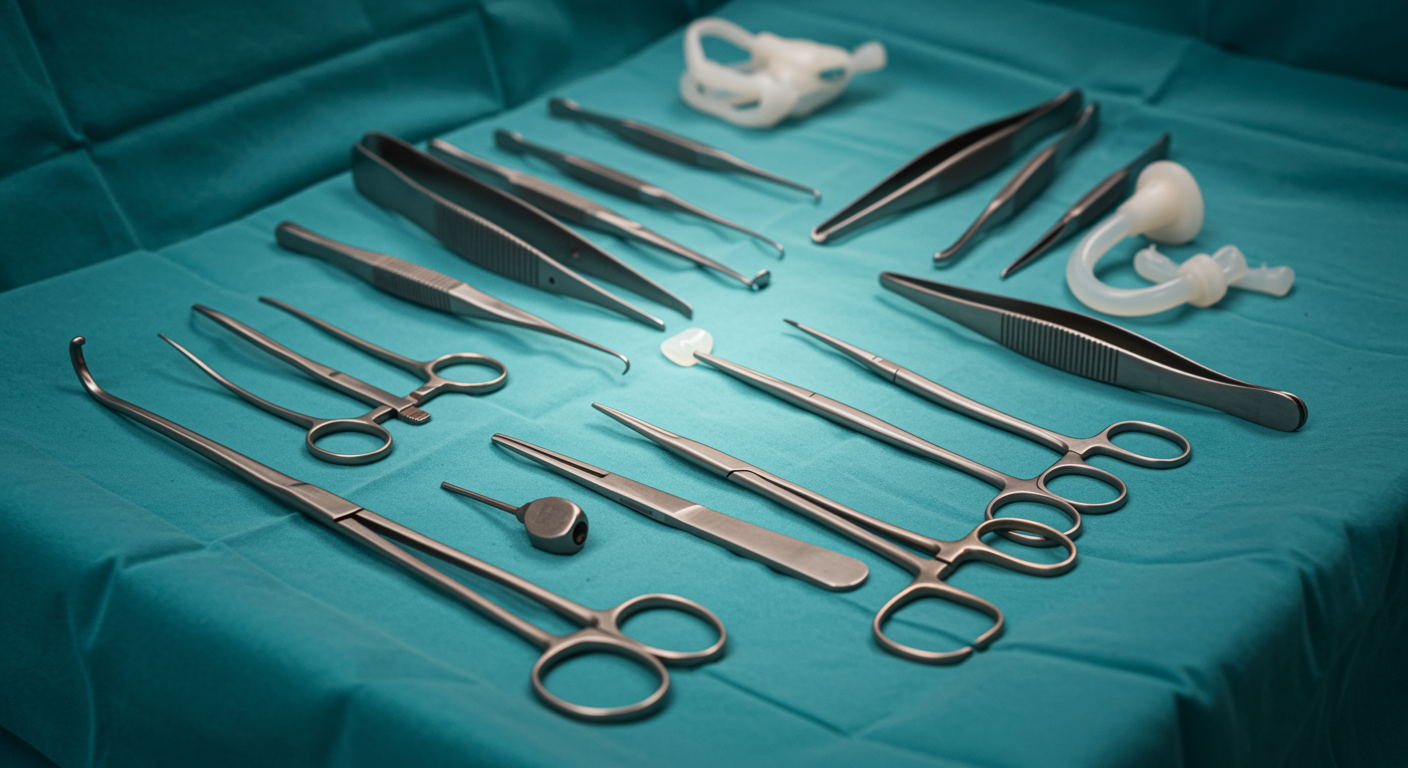
- The Science of Alloys in Surgery
- The Role of Tungsten Carbide
- Procurement and Quality Standards
- Technical Pointers for Material Selection
- Instruments Used in the Cardiac Surgery Suite
- Mastering the Grip Forceps and Needle Holders
- Visibility and Access
- Specialized Bone & Tissue Management Tools
- Sourcing Reliable Medical Equipment
- Important Maintenance Practices for Longevity
- About Us
- Conclusion
From Clamps to Forceps: Why Material Grade Defines Quality in Cardiac Instruments
Precision is essential in the operating room. When a surgeon performs a procedure such as a bypass surgery or a replacement of a heart valve, the way that a tool performs determines the success of the operation. High-quality cardiac surgery instruments have been developed through both engineering and metallurgy to ensure that each moment of the tool is performed with perfect certainty.
The evolution of surgical metallurgy has advanced from simple carbon steels to highly engineered, sophisticated alloys that can continue performing throughout the life of the product even with the extreme environments of modern sterilisation methods as well as the unique requirements of human tissue. The first step to selecting a surgical instrument is determining the right grade of the material so that it will stay sharp, have a proper grip, and maintain its material structure over long-term use.
The Science of Alloys in Surgery
Many modern surgical instruments are made of high-grade stainless steel like the 300 or 400 series or special grades of titanium. These types of metals were selected because of their biocompatibility and how well they resist corrosion. For instance, instruments used in cardiac surgery must remain inert when in contact with blood and saline, preventing any adverse chemical reactions during a procedure.
Titanium continues to become the most popular choice for surgical instruments because it is the lightest and strongest metal on a weight basis. Also, titanium is not magnetic. It will not interfere with this type of equipment if you have an MRI or another type of imaging machine for use in surgery. Additionally, titanium instruments are often lighter than stainless steel instruments, reducing the fatigue of a surgeon during long-term complicated procedures.
The Role of Tungsten Carbide
Manufacturers usually add tungsten carbide inserts to surfaces that wear quickly to improve their service life. This is especially true for tools that either cut or grip. Because tungsten carbide is much harder than stainless steel; it allows cardiac surgical instruments to hold a sharp edge, or maintain their non-slip features, for longer periods, thereby extending maintenance intervals between surgeries.
The gold plating of surgical tool handles typically indicates the presence of tungsten carbide inserts. This colour coding is used to help surgical staff quickly locate and identify the most durable tool trays of instruments so that they can select the most appropriate tool when working with difficult or calcified tissue types.
Procurement and Quality Standards
| Category | Options / Details |
|---|---|
| Price Range (₹) | Below ₹1,500 | ₹1,501 – ₹3,000 | ₹3,001 – ₹9,000 | Above ₹9,001 |
| Business Credentials | Annual Turnover: ₹5 Crore+ |
| Recognition | GST Registered 3+ Years |
| Instrument Type | Vascular Clamp | Scissors | Forceps | Needle Holder | Retractor | Dilator | Rongeur |
| Material | Stainless Steel | Titanium | Tungsten Carbide |
| Instrument Length | 14 cm | 16 cm | 18 cm | 20 cm | 22 cm | 24 cm | 26 cm |
| Tip Type | Straight | Curved | Angled | Blunt | Sharp |
| Handle Type | Ring Handle | Bayonet | Ratchet | Spring |
Technical Pointers for Material Selection
When determining the level of quality of a surgical instrument, a healthcare professional will want to know what specific technical characteristics are related to the instrument, including the following:
- Surface Passivation: A chemical treatment is employed to remove free iron from the surface of metal instruments, thus allowing for the development of a chromium oxide protective coating on the surface, thereby ensuring that the instrument will resist corrosion.
- Rockwell Hardness (HRC): Quality cutting instruments have a specific HRC value range, thereby ensuring that the instrument will maintain its cutting edge and not become brittle.
- Austenitic vs. Martensitic Steel: It is important for the healthcare professional selecting a surgical instrument to understand what material was used to manufacture the body's structural components vs. what material is used on the cutting edge of the instrument in order to ensure longevity.
- Elastic Modulus: This is of great significance for instruments of the clamp variety in that it assures that if the instrument is flexed, the instrument will not permanently deform after being flexed.
Instruments Used in the Cardiac Surgery Suite
Each surgery performed in cardiothoracic surgery involves numerous tools that are designed for use in specific anatomical regions. For example, to occlude a vessel, a vascular clamp must provide enough force to completely close off a vessel without causing harm to the fragile lining (endothelium) of the vessel. Achieving this total occlusion requires that the jaws of the clamp are perfectly aligned and that the tension is correctly calibrated.
Surgical scissors used in cardiothoracic surgery also must be extremely precise. Many surgical scissors used in cardiovascular surgery are very fine-tipped and very sharp. A very detailed dissection of small vessel walls is required to complete procedures successfully. The hinge mechanism of the scissors must be smooth so that the scissors do not "play" or move in an uncontrolled fashion during cutting. As a result of this smooth hinge motion, it is guaranteed that a precise cut will occur.
Mastering the Grip Forceps and Needle Holders
Handling tissue requires a delicate touch. Surgeons rely on forceps to stabilize vessels and heart valves during suturing. The teeth or serrations on these tools are engineered to provide a secure hold without causing trauma to the cardiac muscle or surrounding structures.
Suturing is perhaps the most critical phase of any cardiac repair. A high-quality needle holder ensures that the needle does not rotate or slip during deep-tissue suturing. The jaw surface is often cross-hatched or coated with diamond dust to provide the maximum possible friction against the smooth surface of a surgical needle.
Visibility and Access
Having a clear surgical field is critical for safe operations. To provide surgeons with an unobstructed view of their patient's heart, retractors are used to hold back the chest wall or overlying soft tissue during surgery. The retractors must be made of heavy-duty materials capable of being self-locking to ensure they stay in place while in use for several hours.
When treating narrow or stenotic vessels, dilators are used to gently enlarge the opening. The dilators must be made as a tapered product, and the surface finish must be absolutely smooth to avoid causing micro-tears in the vessel wall. The joining between the tip of the dilator and its shaft must have a transition that is solid without any gaps.
Specialized Bone & Tissue Management Tools
Some surgeons need to remove small pieces of bone or dense cartilage, which can be accomplished with a tool called a rongeur. A rongeur is a very strong, heavy-duty tool that has a scoop-shaped tip and a strong lever action. Although very strong, the rongeur should be properly balanced for controlled incremental removal of tissue.
Because of the specialized manufacturing of these tools, many of the top cardiac instrument manufacturers in India have used internationally accepted quality assurance standards and also used CNC and handcrafted machining methods to guarantee that each tool manufactured will meet the very high standards required by global products.
Sourcing Reliable Medical Equipment
For a hospital opening up, procuring medical devices is one of the largest undertakings they will ever face, and obtaining the right medical equipment can be a monumental task. So, for an administrator of a hospital looking to buy medical devices, using the services of a well-established cardiac instrument supplier in India with extensive experience like Vaishanav Surgical and knowledge about the regulations of various medical devices and the different general tray configurations used in the Indian healthcare system can be an excellent resource.
Working with established cardiac instrument dealers in India would help administrators identify sets of instruments that offer the most value for money, while also ensuring that the materials used to create the instruments are of the highest quality and that they can purchase these items for the lowest possible price.
Surgifact is one of the leading suppliers of precision-engineered surgical instruments for hospitals, clinics, and individual surgeons. They concentrate on producing durable, high-quality surgical instruments, as well as ergonomically designed instruments. Their products, from a simple probe to much more complex retractors, are manufactured to withstand the rigors of a modern surgical facility and meet the most exacting standards for use in the operating room.
Important Maintenance Practices for Longevity
The following maintenance practices should be implemented to preserve the material grade and functionality of these instruments:
- pH-Neutral Cleaning: The use of a pH-neutral detergent will not destroy the chromium oxide layer on the instruments.
- Ultrasonic Cleaning: This process cleans areas of the instruments (tight mechanical joints) that cannot be cleaned with dusting.
- Lubrication of Moving Parts: Surgical lubricants are used to lubricate all moving parts (ratchets and hinges) to minimize the risk of friction or seizing from metal-on-metal contact.
- Inspection Procedures: Regular checks for "pitting" or "spotting" will allow the early identification and repair of any corrosion damage or possible failure of the tool.
Here is another blog you might be interested in.
Checklist: What to Consider When Ordering Surgical Instruments in Bulk
About Us
Surgifact/ Vaishnav Surgical Co., established in 1967, is a globally recognised manufacturer and supplier of precision-crafted surgical instruments. Located in Jalandhar, Punjab, India, we have built a solid and trustworthy reputation for over 59 years in the manufacture of durable, reliable, accurate, and clinically performing medical devices.
We have an extensive range of products to suit many different areas of medical practice; cardiology, orthopaedics, neurology, ENT, and dental surgery are just a few examples. Every instrument is manufactured to the highest quality standards (ISO, GMP, and CE) utilising the best quality raw materials that have been designed and engineered to achieve the highest levels of industry standards.
At Surgifact, our mission is to provide healthcare professionals with high-quality and reliable instruments for safe and efficient surgical procedures. Our commitment to producing quality with precision-engineered surgical instruments. We are now recognised worldwide as a commercial partner by many hospitals and distributors. We will continue to assist the healthcare industry with its continuing need for precision-engineered solutions required by an ever-changing world of medicine.
Conclusion
When you invest in quality materials, you're investing in the safety of your patients. If the quality of materials is low quality, then the surgical tool will develop pits, rust, and mechanically fail. These risks are very serious. They cannot be allowed to happen when caring for your patients' hearts. By purchasing instruments that have been made from high-grade materials, hospitals and employees of hospitals are giving themselves the best possible opportunity to provide successful surgeries.
If you are looking for scissors, needle holders, retractors, scalpel handles, clamps, and other surgical instrument supplies, we are your source. Vaishanav Surgical is committed to providing precision-manufactured medical instruments for hospitals, clinics, and healthcare professionals.
Contact Surgifact today for precision-engineered cardiac instruments that combine metallurgical excellence with surgical reliability.
Material grade directly impacts the durability, precision, and safety of surgical instruments. High-grade materials resist corrosion, maintain sharpness, and ensure reliable performance during delicate cardiac procedures.
Cardiac instruments are typically made from high-grade stainless steel (300 and 400 series) and titanium and sometimes enhanced with tungsten carbide inserts for added strength and longevity.
Titanium is lightweight, strong, corrosion-resistant, and non-magnetic. These properties make it ideal for long surgeries and compatible with imaging technologies like MRI.
Tungsten carbide is added to high-wear areas like cutting edges and gripping surfaces. It increases hardness, maintains sharpness, and extends the lifespan of instruments.
Instruments with tungsten carbide inserts are usually marked with gold-plated handles, making them easy to identify in surgical settings.
Surface passivation is a chemical process that removes free iron and enhances corrosion resistance by forming a protective chromium oxide layer on the instrument surface.
HRC measures the hardness of a material. Proper hardness ensures that cutting instruments stay sharp without becoming brittle or prone to breakage.
Austenitic steel is highly corrosion-resistant and used for structural parts, while martensitic steel is harder and used for cutting edges due to its strength and edge retention.